


Yes, earwax buildup can directly cause tinnitus. When hardened wax presses against your eardrum, it disrupts how sound reaches the inner ear, and your brain responds by generating a ringing or buzzing sound that isn’t really there. The good news is this type of tinnitus is usually temporary and treatable.
Read on to understand what is happening inside your ear, how to spot the signs, and what to do about it. Professional earwax removal can also help safely clear stubborn buildup when earwax is causing discomfort or affecting your hearing.
Table of Contents
What Is Tinnitus, And Why Does Wax Matter?

Tinnitus is the medical term for hearing a sound like ringing, buzzing, hissing, or humming that has no external source. It is not a condition in itself but a symptom, and earwax is one of the most common and overlooked causes of it.
The reason wax matters comes down to simple physics. Sound waves travel down your ear canal, hit the eardrum, and cause it to vibrate in a specific pattern. When a plug of hardened wax sits against the eardrum, it changes that vibration pattern and alters the pressure inside the ear canal.
Your auditory system interprets that pressure change as a sound signal. The brain fills in the gap with noise that does not exist. That is tinnitus from earwax, in plain terms.
Can Earwax Buildup Cause Tinnitus?
Yes, definitively. Earwax buildup is a recognised, documented cause of tinnitus, and it is one of the few causes that can be fully reversed with the right treatment.
The mechanism is direct. Impacted wax, particularly when it hardens and pushes against the eardrum, creates sustained pressure on the tympanic membrane. That pressure sends a continuous, abnormal signal through the auditory nerve, and you hear a ringing or buzzing sound as a result.
This is not the same as age-related tinnitus or noise-induced hearing loss. Wax-related tinnitus has a physical, removable cause, which puts it in a different category altogether.
Symptoms of Earwax Buildup
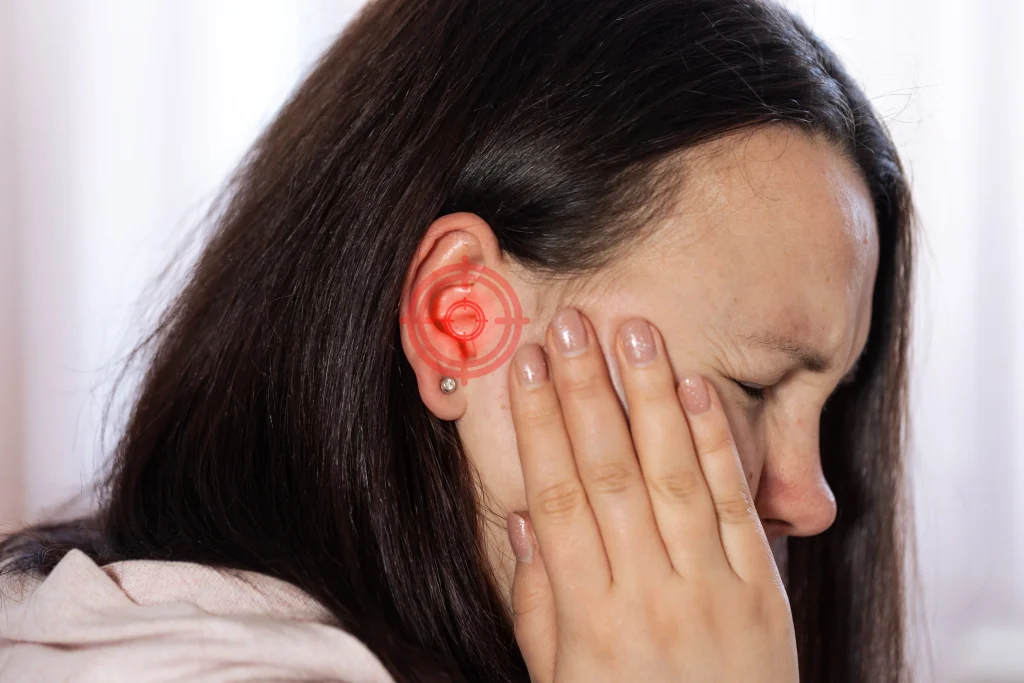
Tinnitus rarely appears on its own if earwax is the cause. It almost always comes alongside other physical signs that point clearly to a blockage.
Watch for any of the following:
- A sensation of fullness or pressure deep in the ear
- Muffled or dulled hearing, as though you’re wearing earplugs
- A dull ache or earache that is not sharp or feverish
- Itchiness inside the ear canal
- A feeling that the ear is “underwater” or blocked
- Tinnitus, specifically a low-pitched ringing or buzzing
If you are ticking more than two or three of these boxes, a wax blockage is a strong candidate. A pharmacist can often confirm this during a quick consultation before you even need to book a GP appointment.
Signs Your Tinnitus Is Caused by Earwax (Not Hearing Loss)
This is worth understanding, because the two can feel similar and the management is very different.
Wax-induced tinnitus tends to come on quickly. Many people notice it right after a shower, after swimming, or after using a cotton swab that pushed wax deeper into the canal. The water swells the wax, contact shifts it, and suddenly there is a ringing that was not there an hour ago.
It also tends to be one-sided and is accompanied by the physical symptoms listed above, particularly that blocked or pressure-in-the-ear feeling.
Age-related or noise-induced tinnitus develops gradually over months or years. It typically affects both ears, there is no sudden trigger, and there is no feeling of blockage. If your tinnitus crept up slowly without any associated pressure or muffling, earwax is less likely to be the cause and a hearing assessment is the better starting point.
Will Removing the Earwax Make the Tinnitus Go Away?
In most cases, yes. But it rarely stops the moment the wax comes out, and that catches a lot of people off guard.
The physical pressure is relieved immediately once the blockage is cleared. Your muffled hearing will improve quickly. However, the auditory nerve and the hair cells in your inner ear can take a few days to fully settle after being under sustained pressure.
For most people, the tinnitus fades noticeably within 24 to 48 hours of wax removal. In some cases it takes up to a week. If it persists beyond two weeks after a confirmed clearance, that warrants a follow-up with an audiologist to rule out an underlying hearing issue that the wax may have been masking.
So to answer the question directly: tinnitus caused by earwax can go away after removal, and usually does. Give it time before drawing conclusions.
How Doctors Diagnose Earwax-Related Tinnitus
The diagnostic process is straightforward and takes minutes. No complex tests are needed at this stage.
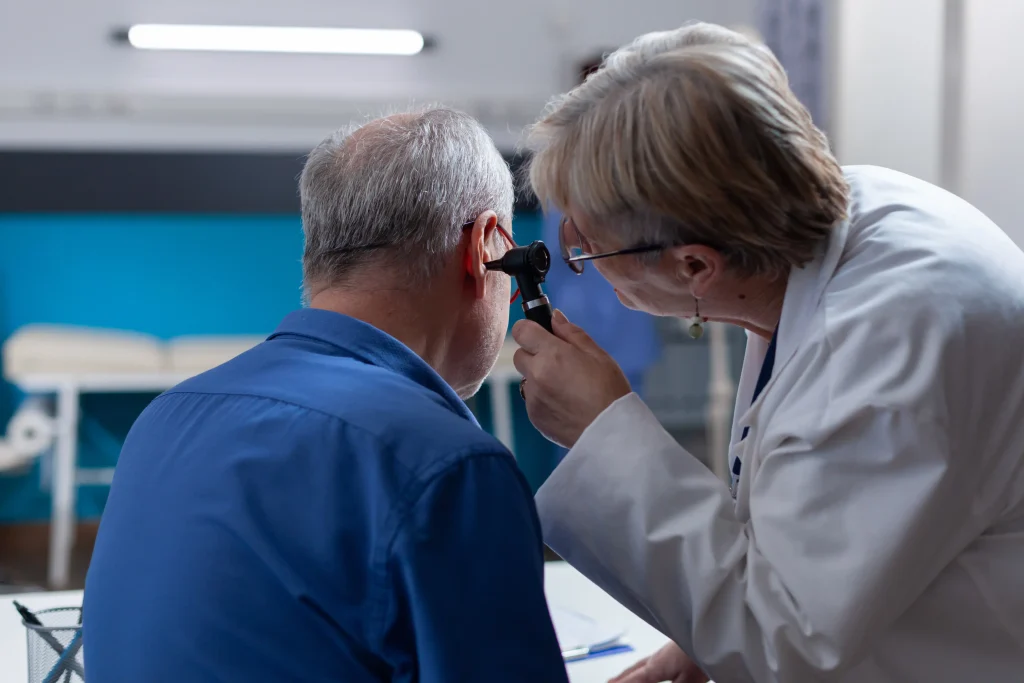
A GP, pharmacist, or audiologist will use an otoscope, a small handheld torch with a magnifying lens, to look directly into the ear canal. If there is impacted wax sitting against or near the eardrum, it is immediately visible. There is no ambiguity.
If the canal is clear and the tinnitus remains, they will proceed to a hearing test to assess whether something deeper is going on. But in many cases the otoscope alone tells the whole story and points straight to the solution.
Safe Earwax Removal Treatments

Getting rid of tinnitus from earwax starts with softening the wax. Trying to dig it out dry is how most people make the problem worse.
Step one: softening drops. Over-the-counter ear drops containing carbamide peroxide or olive oil are a good starting point for mild to moderate buildup. Apply them for five to seven days as directed, and they will often break up a soft plug enough for it to clear on its own or with gentle ear irrigation.
For fast, safe relief: microsuction. If drops alone are not shifting it, professional microsuction is the gold standard. A trained clinician uses a fine suction probe under magnification to remove the wax directly. It does not involve flushing water into the ear, making it safe for people with a history of perforations or ear infections. The procedure typically takes ten to fifteen minutes and provides immediate relief.
What to avoid: cotton swabs push wax deeper rather than removing it. Ear candles have no clinical evidence behind them and carry a burn risk. Neither has a place in safe earwax management.
If your tinnitus is linked to wax and it has been building for a while, microsuction is the faster and more reliable route. Many community pharmacies now offer this service without a GP referral.
Frequently Asked Questions
Can earwax cause tinnitus and vertigo at the same time?
Yes. If the wax presses on structures close to the vestibular nerve, it can briefly affect balance, causing mild dizziness or vertigo alongside the ringing.
Does earwax cause pulsatile tinnitus specifically?
Pulsatile tinnitus, where the sound beats in time with your pulse, is more often linked to vascular issues than wax. Wax removal is still worth trying first, but pulsatile tinnitus warrants a GP review regardless.
How long does tinnitus last after ear wax removal?
For most people, it settles within 24 to 72 hours. If ringing persists beyond two weeks after confirmed wax removal, book an audiology assessment.
Can I use olive oil long-term to stop wax from building up again?
Two to three drops of olive oil in each ear once or twice a week is a safe maintenance habit for wax-prone ears. Do not do this if you have a perforation or grommets.
Should I avoid water if I have wax-related tinnitus?
While the wax is still present, yes. Water can swell the plug further and worsen the blockage. Keep ears dry until the wax has been cleared.
Conclusion
Earwax buildup is a direct, physical cause of tinnitus. It works by pressing against the eardrum, altering pressure, and triggering sounds your brain generates in response.
The signs that wax is responsible are fairly clear: sudden onset, one-sided ringing, a blocked or pressured feeling in the ear, and muffled hearing. Wax-related tinnitus is also among the most treatable types. Softening drops handle mild cases, and professional microsuction handles the rest quickly and safely.
If the ringing started recently and your ear feels full or blocked, get it looked at. An otoscope check takes two minutes and often provides the answer on the spot.