


Weight loss injections, such as Mounjaro and Wegovy, can help you shed 5% to 22% of your body weight in 12 to 18 months. The amount you lose depends on the medication, your dose, and your lifestyle choices.
Most people notice few changes in the first four weeks. This is when their body adjusts to the starting dose. Visible fat loss typically begins between weeks five and twelve.
Keep reading for the complete timeline, clinical data, and honest answers to the questions most people ask before starting.
Table of Contents
How Do Weight Loss Injections Work?
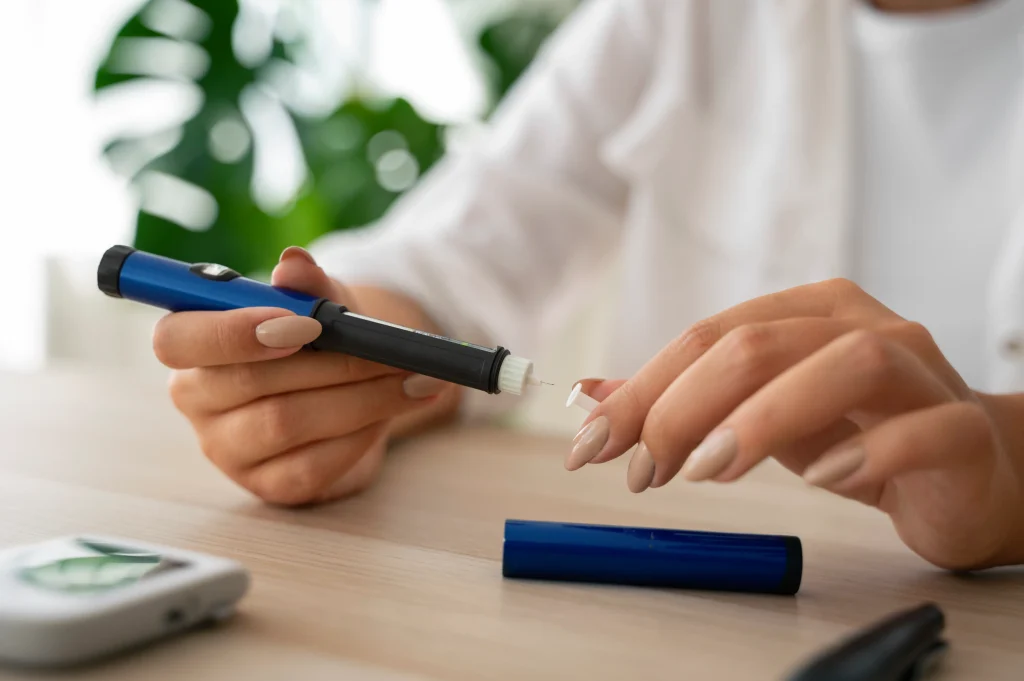
Weight loss injections belong to a class of medicines called GLP-1 receptor agonists. Some, like tirzepatide (Mounjaro), also target GIP receptors, making them dual-action.
These medications mimic hormones your gut naturally releases after eating. They tell your brain you’re full. They also slow the rate at which your stomach empties and reduce cravings.
The result is a genuine reduction in appetite, not willpower on a drug. You simply feel less hungry, and for many people that is the missing piece that diet alone never provided.
Eligibility Criteria
Patients typically qualify with a BMI ≥ 30 or ≥ 27 with a weight-related comorbidity. Age eligibility differs by treatment: Mounjaro is licensed for adults aged 18–84, while Wegovy is licensed for those aged 18–74. To qualify, patients must have previously tried to lose weight. This includes a supervised diet, behavior changes, and more exercise, but they didn’t see enough results.
Weight Loss Injection Results Timeline

Results are not linear. They build gradually as your dose increases, and different stages deliver different changes. Here is what the evidence actually shows.
Weeks 1 to 4: What to Expect
The starting doses for these medications, 0.25 mg for Wegovy and 2.5 mg for Mounjaro, are not therapeutic. They exist to help your body build tolerance before the dose escalates.
Reduced appetite is usually the first thing people notice, often within the first few days. Some find that food becomes less of a preoccupation, and portion sizes naturally shrink without much effort.
Early water weight changes are common in week one. The scale may drop by a kilogram or two quickly, but this reflects fluid shifts rather than fat loss.
Mild gastrointestinal side effects, such as nausea, bloating, or loose stools, affect many people during the first few weeks. These are dose-dependent and typically ease as your body adjusts.
This is also the best time to build healthy habits around food and movement. The medication creates a window where change feels more manageable. Use it.
Weeks 5 to 12: Noticeable Weight Loss
Between weeks five and eight, most patients are on a higher dose, and actual fat loss begins. Steady fat loss of 0.5 to 1 kg per week is realistic at this stage for many people.
Some people notice more energy. This is especially true for those whose weight impacts their sleep or movement. A change in how clothes fit is often the first outward sign others notice.
Dose adjustments continue during this period. Moving from the starting dose to the maintenance dose takes time. It’s not just one step. Your prescriber will help set the pace based on how well you tolerate the medication.
Months 3 to 6: Significant Progress
This is where clinical trial results start to become visible in real life. Patients taking full therapeutic doses often lose 10% or more of their starting body weight within six months.
People with elevated blood sugar often see meaningful improvements by this stage. The GLP-1 mechanism lowers glucose while also promoting weight loss. This is why these medications were first created for type 2 diabetes.
Improvements in mobility, sleep quality, and general well-being are frequently reported. For some patients, this is when the treatment shifts from feeling like a medical intervention to feeling like a genuine change in how their body functions day to day.
After 6 Months: Long-Term Results
Clinical trials show that many patients continue to lose weight beyond 68 weeks. However, the rate of loss slows down as the body nears a new set point. Continued weight management requires staying on the medication or having a clear plan for how to come off it.
Stopping abruptly without addressing lifestyle habits typically results in weight returning. Discuss maintenance strategies with your prescriber before discontinuing the medication, not afterward.
The best results come from combining the medication with real lifestyle changes. This means eating a lower-calorie diet of whole foods, staying active, and getting good sleep. The injection is a tool, not the whole solution.
Exclusions and Precautions
These treatments are not suitable for everyone. Specific contraindications include a history of eating disorders, pregnancy or breastfeeding, a personal or family history of medullary thyroid cancer (MTC) or MEN2, previous pancreatitis, type 1 diabetes, severe renal or hepatic impairment, Crohn’s disease, and significant gastroparesis.
If you take the oral contraceptive pill and are prescribed Mounjaro, use condoms as well, or switch to a non-oral method, for four weeks after you start and for four weeks after every dose increase.
Dose increases happen roughly monthly at first, so this comes up more than once. Patients should tell healthcare providers about their medications before general anesthesia. This helps reduce the risk of pulmonary aspiration.
How Much Weight Can You Lose With Weight Loss Injections?
Clinical trial data gives us reliable benchmarks, though individual results vary.
| Medication | Active Ingredient | Trial Duration | Average Weight Loss |
| Mounjaro | Tirzepatide (GIP + GLP-1) | 72 weeks | 15.0%, 19.5%, and 20.9% by dose (NEJM) |
| Wegovy | Semaglutide (GLP-1) | 68 weeks | 15% average; 18.7% at 7.2 mg dose (STEP UP) |
| Saxenda | Liraglutide (GLP-1) | 56 weeks | 5% to 8% of body weight |
You may see Ozempic mentioned in this context. It contains the same active ingredient as Wegovy but is licensed in the UK for type 2 diabetes only. Prescribing it for weight loss is off-label. A responsible prescriber will recommend the licensed treatment instead.
Mounjaro has shown strong weight loss results in direct comparisons. This is mainly because it targets two hormonal pathways. Saxenda is an established option that may deliver more modest results for some patients.
These percentages translate differently depending on starting weight. Someone weighing 110kg could lose 16 to 24kg on Mounjaro over 18 months, which is a meaningful change in health risk, not just appearance.
Factors That Affect Weight Loss Results

Two people can take the same medication at the same dose and get noticeably different results. These are the variables that matter most.
Starting Weight and BMI
People with a higher starting BMI often lose more total weight in kilograms, though the percentage lost may be similar. Metabolic differences, like insulin sensitivity and hormone levels, also matter.
Medication Type and Dose
Tirzepatide outperforms semaglutide in most trial comparisons. Reaching the full maintenance dose is also essential. Poor results might be due to a low dose. But adherence, treatment length, tolerability, and personal factors also play a role.
Diet and Nutrition
The medication suppresses appetite but does not choose what you eat. Eating calorie-dense, ultra-processed food in smaller portions may still deliver more calories than eating whole foods in larger portions. Nutritional quality matters, not just quantity.
Physical Activity
Exercise does not need to be extreme to support results. Consistent movement, even daily walking, preserves muscle mass during weight loss and improves metabolic rate. Losing muscle alongside fat is a real risk when dieting without any activity.
Sleep Quality
Poor sleep raises cortisol and hunger hormones like ghrelin. This can partially counteract the medication’s effects. Seven to nine hours of quality sleep is not optional if you want to see full results.
Stress and Mental Health
Chronic stress promotes fat storage, particularly around the abdomen. Emotional eating patterns do not disappear with appetite suppression. Addressing the psychological side of eating can measurably improve outcomes.
Consistency With Treatment
Missing doses or stopping and restarting without medical advice disrupts the medication’s effect. These treatments work best when taken consistently on the same day each week, as prescribed.
What to Do If You Aren’t Seeing Results

Slow results in the first month are almost always expected. But if you are three months in and the scale has barely moved, a few specific things are worth checking.
Fact-check your dose
If you are still on 0.25 mg Wegovy or 2.5 mg Mounjaro, those are tolerance-building doses. They are not designed to produce significant weight loss. Speak to your prescriber about escalating your dose if you have been tolerating the medication well.
The caloric factor is real
GLP-1 medications reduce hunger but do not override high-calorie food choices. A smaller portion of a 900-calorie meal can still contain more calories than a full serving of a lower-calorie alternative. If your appetite is suppressed but you are gravitating towards dense foods, the maths may not be adding up.
When to talk to your prescriber
If you’ve been on your full maintenance dose for six months and lost under 5% of your body weight, your prescriber should check if this medication is effective for you. Note that this is six months at the full dose, not six months after starting the medication. A different drug class or additional support may be appropriate in those cases.
Weight Loss Injections Results vs. Other Weight Loss Methods
These medications do not exist in isolation. It helps to understand where they sit relative to other options.
Injections vs. Diet Alone
Large studies show that calorie restriction leads to a 3% to 5% weight loss on average over a year. Most people regain this weight within two years. Weight loss injections often double results for most patients. They also provide longer-lasting effects when used consistently.
Injections vs. Weight Loss Tablets
Orlistat, the most common weight-loss tablet available in the UK, works by blocking fat absorption. It produces an additional weight loss of around 3% to 5% compared to diet alone. GLP-1 injections usually lead to better weight loss than oral options in studies. However, tablets are often cheaper, making them a good starting choice for some patients.
Injections vs. Bariatric Surgery
Bariatric surgery, especially gastric bypass, is very effective for severe obesity. Patients typically lose about 25% to 35% of their body weight. In trials, high-dose Mounjaro has shown weight-loss results comparable to those of bariatric surgery. These options can help manage severe obesity.
Surgery carries risks, recovery time, and permanence, and it is not the right first step for everyone. But it remains the most effective option for severe obesity, and for some patients it is the appropriate route rather than a last resort. If your BMI is 40 or higher, or if you have serious obesity-related issues, talk to your GP. Ask about a referral to a specialist weight management service. This can help you explore both surgical and non-surgical options.
Frequently Asked Questions
Can I stop taking weight loss injections once I reach my goal weight?
Stopping without a structured plan typically leads to weight regain. Speak to your prescriber about a supervised step-down approach once you reach your target.
Do weight loss injections work if I have polycystic ovary syndrome (PCOS)?
GLP-1 medications have shown benefit in women with PCOS, improving both weight and hormonal markers. A prescriber should decide if GLP-1 medications are right for you. They will look at your health profile.
How long before weight loss injections start affecting hunger noticeably?
Many patients see a drop in appetite within the first week, even at the starting dose. However, noticeable fat loss may take longer to show on the scale.
Will weight loss injections affect my mood or mental health?
Some patients report improved mood as weight decreases and energy improves. A small number report mild mood changes early on. Report any significant mental health changes to your prescriber promptly.
Can weight loss injections be used alongside other prescription medications?
Most common medications are compatible, but interactions exist. Always provide a full list of your current medications to whoever is prescribing your weight loss treatment.
Conclusion
Weight loss injections can lead to meaningful results for most people. This happens when they use them regularly and at the correct dose. The first four weeks are about tolerance, not transformation.
Visible progress builds from month two onwards, and the most meaningful changes tend to appear between months three and six. Results are not guaranteed and are influenced by dose, diet, activity, sleep, and how consistently the medication is used.
If results are slow, check the dose before concluding the medication is not working. For those who stick with it, this treatment is a non-surgical weight loss option available in the UK.